
All platforms
Platform
Applexia
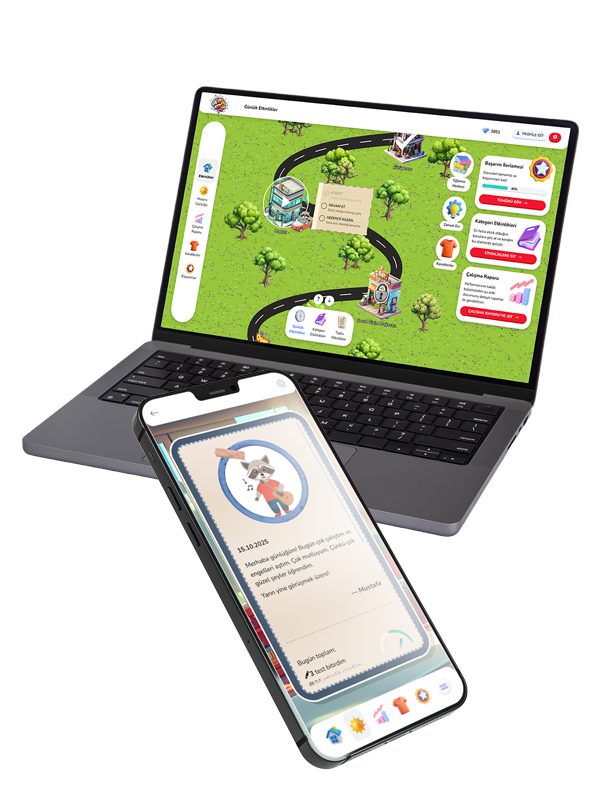
Applexia is the first and only platform to use a specialised recursive algorithm for dyslexia, and it offers AI-personalised, gamified practice for dyslexia and ADHD.
Definition
What is Applexia?
Applexia is a pedagogy-based education app developed by Cognicise for children diagnosed with dyslexia, and it also addresses attention difficulties. Its gamified activities adapt to each child's performance and support reading, writing and language skills, while a progress dashboard keeps parents informed. Its content is pedagogically approved and produced by academics.
Audience
Who it is for.
Applexia is designed for children with dyslexia, and it also supports the families and special education institutions around them.
Children with dyslexia
Applexia is an education app designed specifically for children diagnosed with dyslexia. Its content is suited to their needs and also addresses difficulties in the area of attention.
Parents
The family dashboard lets parents follow their child's progress from within the app.
Special education institutions
Applexia is suitable for special education institutions, where it supports the work done with each child.
Method
How it works.
Applexia combines activities, reports and personalised content in one gamified learning experience.
Activities
The app offers daily activities, category activities and combined activities. Children practise through gamified tasks with visual and auditory support.
Cognitive skill report
A cognitive skill report summarises how the child performs. Applexia also includes early literacy and working memory scales, cognitive development tests and detailed progress reports.
AI-supported personalisation
Applexia offers AI-supported personal development and adapts its content to each child's performance.
Badges and the Atelier
A badge system rewards achievements. In the Atelier, children create and customise their own characters, and in Lexi Moda they earn Lexi characters.
Parent dashboard
Parents follow progress from within the app and see how their child is moving forward.
Academic foundation
The special content in Applexia is produced by academics and is pedagogically approved. Applexia is the first and only platform that works with a recursive algorithm designed for the needs of people with dyslexia, and it offers personalised training modules and multi-platform support.
What it measures
Applexia groups its activities into the categories below and reports the child's performance under five main cognitive headings.
Availability
Languages and stores.
Applexia is offered in Turkish and English.
Languages
Get Applexia
FAQ
Frequently asked questions.
- What is Applexia?
- Applexia is a pedagogy-based education app developed by Cognicise for children diagnosed with dyslexia. It offers gamified activities that adapt to the child's performance, and it supports reading, writing and language skills.
- Who is Applexia for?
- Applexia is designed for children with dyslexia. Parents follow their child's progress in a family dashboard, and Applexia is also suitable for special education institutions.
- How does Applexia personalise learning?
- Applexia adapts its content to each child's performance through AI-supported personal development. A cognitive skill report and progress reports show how the child is doing.
- What kind of activities does Applexia contain?
- Applexia has more than 10,000 activities. They are organised as daily, category and combined activities and cover areas such as decoding, pattern completion, short-term memory, mental rotation and auditory perception.
- Is Applexia free?
- You can download the Applexia mobile app for free, and the app also offers in-app purchases.
- Which devices does Applexia run on?
- On Apple devices it runs on iPhone and iPad with iOS 13.0 or later, on Mac with an M1 chip (macOS 11.0 or later) and on Apple Vision. The app is also available on Google Play.
- Who develops Applexia and which languages does it offer?
- Applexia is developed by Cognicise and is offered in Turkish and English.
From the journal.
All articles